A Group Lease Needs One Named Point of Contact
By Richard Joseph Spinelli, Sandhills Real Estate
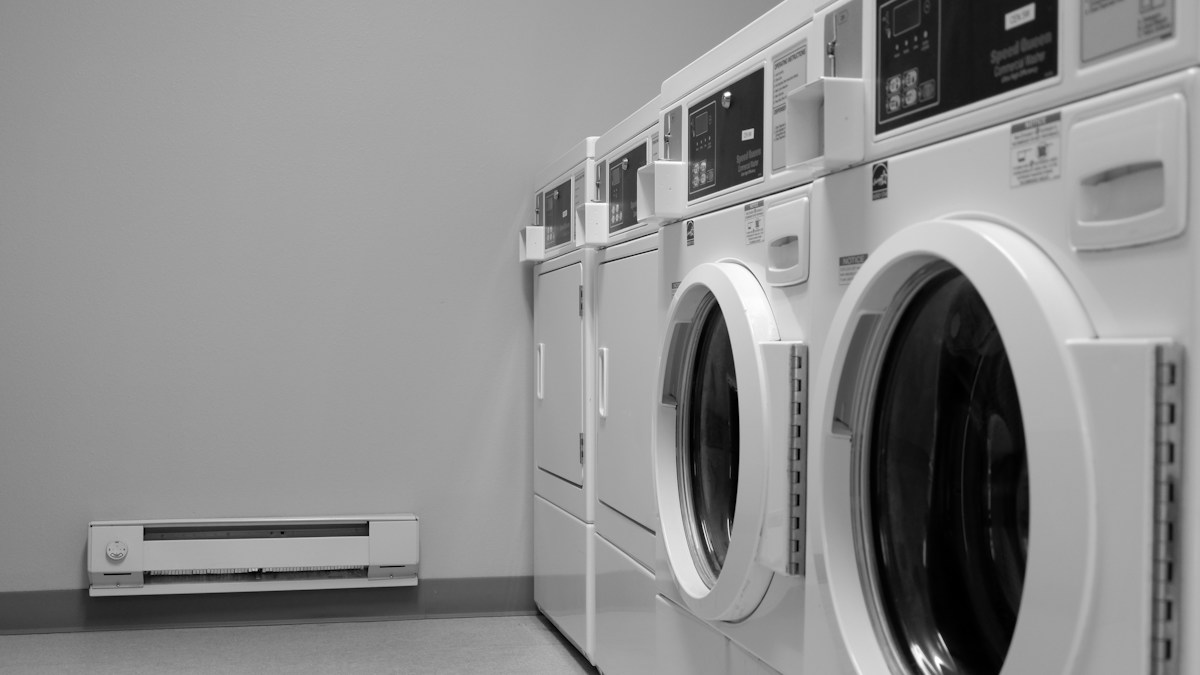
On a Monday in October the dryer in a five bedroom house on Lorillard Place stopped heating, and by Friday four different people in that household had told me about it separately. Every one of them was polite. Not one of them knew whether anybody else had already called.
The landlord all four were trying to reach is me, Richard Joseph Spinelli. Sandhills Real Estate, the firm I cofounded in 2020, owns 27 units across 13 student housing properties in Belmont, a few blocks from Fordham, and we lease nearly all of them to groups rather than to individuals. If you lease to households instead of to people, you have had this week too.
Duplicate maintenance requests in a shared student house
Monday evening a text arrived from the second floor saying the dryer was turning but running cold. I answered it inside the hour, put the house on the list for Wednesday morning, and said so in writing.
Tuesday at nine a different resident emailed the same report. I answered that one as well, because the alternative is leaving a resident unanswered, and by lunchtime two people had been told Wednesday and neither had told the other.
Tuesday afternoon a third called between classes, apologizing for bothering me, which told me he had no idea two housemates already had. Wednesday morning, with a trade already in the basement and the back panel off the machine, a fourth message asked whether anyone was ever coming out.
Nothing in that week was a maintenance failure. The failed part was a cheap one, the basement sits inside the walk we make every day in Belmont, and the dryer ran hot again before noon on Wednesday.
What failed was the intake. I spent four separate pieces of a week answering one question, and the house still did not know, on Wednesday morning with a trade standing in its own basement, what was happening down there.
Thursday I counted it honestly. Three of my four replies did no work, because each one reassured a person who was never the one in doubt.
One broken dryer reported four times is one request and three people checking whether the first one landed.
Who should report a repair in a shared student house?
One person, named by the household before anybody moves in, with everyone else free to tell that person. A group lease is a single agreement, so it needs a single return address for anything that needs fixing.
We ask for that name at signing now and write it on the file beside the lease. It costs a minute at a table where five people are already signing things, and it is the cheapest piece of operating work I know.
The offices that advise students on off campus housing have been saying a version of this for years, which is that a household should write down who handles what before it starts living together. Ours is a narrower version of the same instinct, one line rather than a page, and pointed at us rather than at each other.
Being precise about what that name is matters more than the name itself. The contact is not a head tenant, has no authority over anybody, holds no money, and carries no part of the lease the other four do not carry equally.
The contact is one thing only, the person we call back. A house can change the name whenever it likes by telling us, and one did so the same week it was set, for reasons I never asked about.
None of this surprises anyone who has watched a group pick a unit. The way a group decides together at a showing already shows a household acting as one unit, minutes before anyone signs a thing.
The household is one customer, and I have made that case at length in a note on why the group is one customer. What it leaves open is the ordinary Tuesday question of how that one customer actually reaches us.
University housing offices tell their own students that one of the first steps in getting a repair made is to inform the landlord about the problem. That is good advice, and it is only ever as good as our ability to hear it once.
At 27 units nobody here has triage as a job. The same few of us answer the phone, walk to the building and write the file afterwards, so a request that arrives four times is four interruptions of the work that was going to fix it.
What happens when five roommates all report the same repair?
Two things happen, and the second is the worse one. We answer the same request several times, and some other fault in the same house gets reported by nobody at all, because each person assumes a housemate has already mentioned it.
Psychologists have a name for the second half of that, which is what happens when people in a group each wait for somebody else to act. It is ordinary behavior in any group of five, and not worth being annoyed about.
The duplicates are the visible cost and they are the cheap one. The silence is the expensive one. It never arrives as a complaint, it arrives in August as a list of small things nobody mentioned all year.
A loose stair rail went an entire term that way. Four people had noticed it, each believing somebody else had said something, and I found it on a turn week walk through an empty house.
The named contact does not solve that, and I will not pretend it does. It gives the house a channel it can use, and it leaves the noticing where it always was, with whoever is standing in front of the problem.
The cost of naming one student as the contact
So the named contact is what we ask for, and I should say plainly what it costs the house. One student ends up holding a small administrative job nobody applied for, in a house where every other duty is being argued about already.
That job has to rotate, by semester at the latest, or it stops being a convenience and turns into a grievance between people who still have to share a kitchen until June. We say that out loud at signing now rather than letting a house discover it in March.
Then there is my half of it. I will tell the other four that I have logged what they told me and that the time gets confirmed with their contact, rather than confirming it four separate ways to four separate people.
Another operator would call that a wall between a resident and a repair, and would be describing something real. I hold the line anyway, with one carve out that is not negotiable: anything with smoke, water, gas or a lock in it skips the contact entirely and comes straight to us, from anybody, at any hour.
The wider version is the one I will not run. Four answers to one question only looks like service. What it actually spends is the attention that should have gone to the back bedroom nobody has mentioned since September.
I also give something up by closing the extra channels, and leaving that out would be dishonest. Four reports were four chances to hear from four people, and three of them were redundant only because the first one happened to be right about what was broken.
The quietest resident in a five bedroom house now has one more step between a cold back bedroom and me, and that is the resident I was least likely to hear from anyway. I have no clean answer to it. We ask the contact twice a year whether anything has gone unsaid, which is a patch rather than a fix.
The last thing I will defend is how small this is. No system, no software, nothing to buy. A line on a form, a question asked once while five people are already at a table, and a habit of calling one number back.
If you run group leases, that is the whole of it, and the bill for it lands on one student in the house who then needs you to remember that it did.
A household that signs together should only have to ask once.
Richard Joseph Spinelli is the cofounder of Sandhills Real Estate, a student housing owner and operator in the Bronx. More at richardjosephspinelli.com.
Photos by Yun Cho and E. Vitka on Unsplash
Sources
Roommates and Housemates
Maintenance Requests
Diffusion of Responsibility


