Student Apartment Safety Is Mostly Basic Hardware
By Richard Joseph Spinelli, Sandhills Real Estate
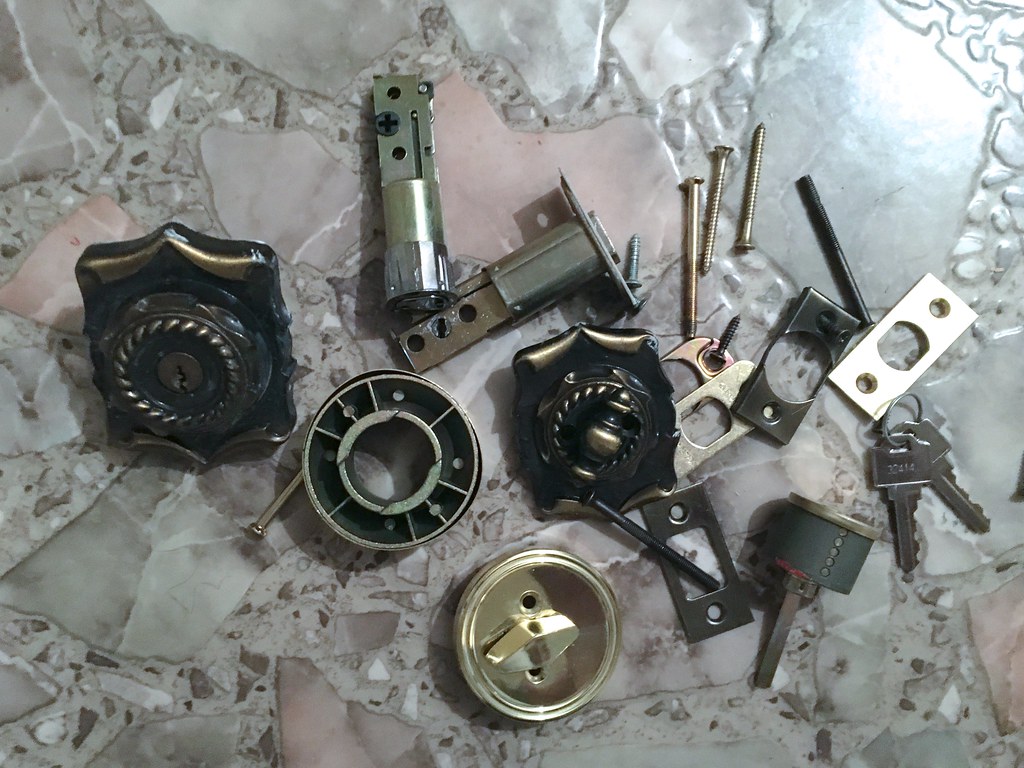
A stoop light out, a front door that catches only when somebody pulls it, and a window lock painted shut long before we owned the house. Those three come back every year, in house after house, and they turn up before anybody thinks to call them a problem. I walk our blocks most mornings and the same short list is usually what is waiting.
I am Richard Joseph Spinelli, cofounder of Sandhills Real Estate, and we own and operate 13 student housing assets and 27 units in Belmont, a short walk from Fordham's Rose Hill campus. Thirteen assets of similar age and similar bones is enough to watch the same failures repeat instead of guessing at them.
This is written for the operator deciding what goes on next week's schedule when something more visible is also waiting, and for the parent who wants to know what a landlord actually checks.
Student Housing Safety Requests Repeat Every Year
Across the portfolio the requests that read as safety concentrate in five places, and I can name them in order. Exterior and vestibule lighting. Door hardware that latches and locks without a hand helping it.
Window locks painted over by somebody two owners back. Smoke and carbon monoxide alarms, which need testing against a calendar rather than when a resident notices a chirp. The street door buzzer, which becomes a safety item the minute a household gives up on it and starts leaving the door off the latch instead.
None of that is interesting work and none of it photographs well. All of it sits in the part of the house a student touches on the way in at eleven at night, which is the only hour that matters for how safe a place feels.
What makes me trust the pattern is that it holds across houses bought in different years and renovated to different depths. The finishes differ by house. The failures arrive in the same five places, in roughly the same order, in roughly the same month.
The alarms are the one item with a published schedule attached, and the association guidance on testing and replacing home smoke alarms is specific enough that there is no excuse for improvising it. We write down the date each one was pressed, which is the habit I argued for in a post about keeping building history in writing, because a list that lives in somebody's memory is the list that gets skipped in a busy month.
The Early Tell Is a Door That Needs a Pull
The tell shows up months before the request does. A door that needs a pull to seat is a door that has already stopped working, and in a prewar frame it happens for an ordinary reason.
The frame moves with the season. The strike plate falls out of line by about the width of a dime, the latch stops dropping into it on its own, and the door rests closed without being locked. A resident pulls it, hears it catch, and has no reason to think about it again.
Nobody reports that, and I have stopped expecting anyone to. A student signing a first lease has no standard to compare the door against, and weighs asking for anything against the risk of being the household that complains.
A door that latches nine times out of ten will never produce a maintenance request, and it is still a door that does not latch.
What follows is a habit rather than an incident. The household stops expecting the door to seat, so they stop testing it, and a few weeks later the vestibule door gets propped for a delivery and nobody unpropped it.
So for this one category I put more weight on a scheduled walk than on what the household reports, even though reported requests carry most of what we learn about the rest of the house. Speed is most of what we sell, and I have written on our ideas page about responsiveness being the actual product in student housing, but speed has nothing to work with when the failure never gets reported.
The walk itself is unglamorous. Open each exterior door and let it go with no hand on the knob. Look at the fixtures at dusk rather than at noon, since a dark bulb is invisible in daylight. Try every ground floor window lock, press the alarms, then ring the buzzer from the sidewalk the way a visitor would.
Two Houses a Few Doors Apart Went Different Ways
Two of our houses sit a few doors from each other on the same street. Both were renovated the same summer and both went into service with new exterior fixtures, new locks and tested alarms on the day the keys went out.
On one house the weekly walk included the stoop, the vestibule and both exterior doors. On the other it did not, because that renovation finished late and the walk never got added to the route.
By February the second house had a street door propped with a folded flyer, a stoop fixture that had been dark long enough that nobody thought to mention it, and a back door that needed a shove. The first house had none of those.
Neither the renovation nor the residents explain the gap between them. The list is the only variable that moved, and that is why I treat a route as hardware in its own right.
The same thing shows up at a scale far beyond ours. Old housing stock is most of what students live in near urban campuses, and the national surveys of housing conditions in occupied homes keep finding that the deficiencies which persist are the small ones nobody escalates, in buildings that are otherwise sound.

Scheduled Hardware Checks Have a Real Limit
Plenty of operators would tell me this is attention spent in the wrong place. Their argument is that residents report what bothers them, that a latch cannot fix a propping habit, and that the hours belong to the kitchen that leases the unit in March.
I think they are wrong about the first two and right to raise the third. A door that seats on its own does not stop anyone from propping it, but it removes the easiest reason to, which turns propping into a decision instead of a default.
The cost is real and I will state it plainly. The walk eats hours out of the quiet months, most of it confirms that hardware which was fine is still fine, and it cannot be collapsed into one annual inspection because the failures are seasonal and an inspection is not.
It also competes directly with the visible work, and when the choice lands in the same week I put the hardware first. That is the judgment another operator can reasonably dispute, because the visible work is what a group walks into on a showing and the hardware is what they never notice until it fails.
There is one place the schedule earns nothing. Hardware a household touches daily, a bedroom door lock or a bathroom latch, gets reported within a day of going wrong, so the route should concentrate on what is shared and what faces the street.
The deeper limit is the one worth saying out loud. Nothing on that list reaches past the threshold, and I do not control the sidewalk, the block at two in the morning, or who a resident decides to let in.
A landlord who talks about safety as though he does control those things is making a promise that cannot be kept, and the students and parents I talk to can hear the difference immediately. The honest version is narrower, and it is also the version that survives contact with a January night.
What I will stand on is the list and the route, which take a morning a week across a walkable portfolio. It is the cheapest part of the whole operation and the part residents feel without ever naming it. Buildings get judged on the things nobody photographs, and reference work on how residential buildings are designed and maintained keeps circling the same unglamorous ground.
A lit way in and a door that locks itself is most of what anybody means by a safe apartment, and both of them are somebody's job on a Tuesday.
Richard Joseph Spinelli is the cofounder of Sandhills Real Estate, a student housing owner and operator in the Bronx. More at richardjosephspinelli.com.


