Old House Renovation Needs the Right Order of Work
By Richard Joseph Spinelli, Sandhills Real Estate
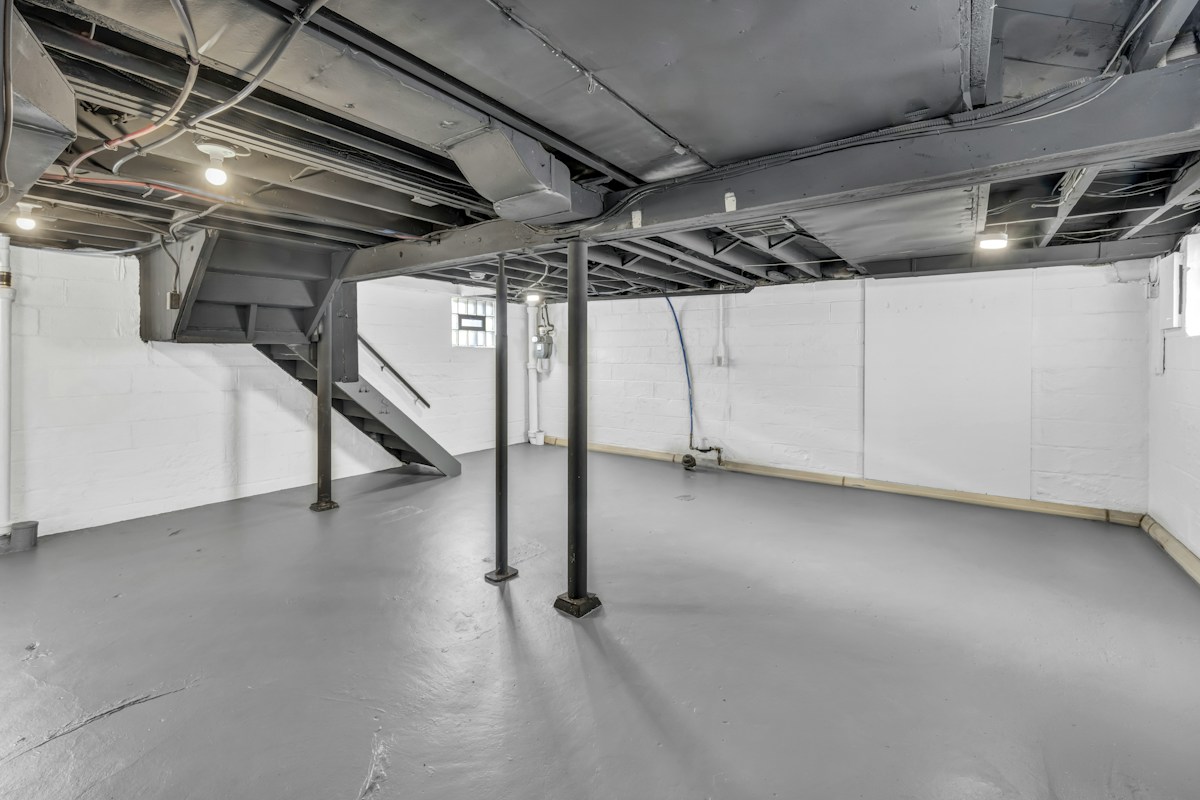
In June I stand in the cellar of a house we have just emptied, with a list of renovation jobs and one summer to do them in. The list is rarely the hard part. The order is.
I will own that call with the full name, Richard Joseph Spinelli. We have been renovating houses a few blocks from Rose Hill since 2022, and that is now 13 student housing properties and 27 units in Belmont. Not one of them was built in this century.
Every summer that list contains two kinds of work, and the two kinds compete for the same weeks, the same crew and the same empty building. This post is about how I decide which of them goes first, and what the decision costs the household that moves in afterward.
Should you renovate the systems or the finishes first?
Systems first, every time, because every riser, drain and electrical run in an old house lives behind a finished surface. Do the kitchen before the pipe behind it and you are paying to break the kitchen open again.
By systems I mean the parts of the building that move through it rather than sit in a room. Heat distribution, water supply and waste, electrical capacity, and the vertical chases that carry all three from the cellar to the top floor.
By finishes I mean what a group sees at a showing in March. Floors, cabinets, tile, paint, the bathroom fixtures, the light in a back bedroom. Those are the parts of the work residents can actually point at.
In a prewar house the chases are stacked. One vertical run serves the same corner of the kitchen on every floor, so reaching it means opening the same wall in three apartments rather than one.
That stacking is what makes the sequence unforgiving. A pipe that takes a week in an empty building takes a season once the rooms around it are finished and the beds are full.
The cellar is where that gets settled, which is why the first walk through an empty house starts down there with a light rather than in the kitchen. What the cellar shows is the age of the runs, where somebody has already patched them, and how many floors a single repair would reach.
The order of work in an old house only runs one way
Finish work can always wait for system work. System work can never wait for finish work without paying for the finish work twice. That asymmetry is what the June decision turns on.
It helps that the building keeps its own calendar. The components that reach the end of their own service life are things like roofs and heating systems, and they come due on a schedule the rooms around them have no say in.
So the sequence is not really a preference about taste. It is a question of which jobs foreclose the others, and in old housing stock the answer is always the same direction.
I am not the only one ordering work this way, and the reasoning outside housing is worth borrowing. Public energy guidance tells programs to meet a weatherization need at the same time as or before any mechanical or appliance upgrade is funded. The thinking there is the thinking in the cellar, which is that the layer underneath decides what the layer above is worth.
The one deadline I will not move is the end of the renovation itself, and I have written before about why the finish date has to sit a fixed stretch before the keys. That argument is about the last weeks of the summer. This one is about which jobs fill the weeks before them.
The order is the only part of a renovation you cannot go back and change.
At 13 properties inside a short walk the sequence is also a staffing question. One crew cannot open two buildings at once, so the house with the oldest riser gets the summer and the house with the tired kitchen waits for the next one.
Across Bathgate Avenue and Lorillard Place that means the portfolio improves unevenly on purpose. In any given September some houses are a year behind on their rooms and a decade ahead on what carries water through them, and I would rather explain that to a group than the reverse.
Does renovating the systems first cost you a lease?
Sometimes it does. A group walking through in March sees a kitchen that was left alone for another year and cannot see the riser that replaced it on the schedule, and some of them sign three doors down.
I have argued elsewhere that what lasts should beat what the first showing rewards, and I will leave that argument where it sits. The sequencing question is narrower than that one. Both jobs can be the durable choice and only one of them can go first.

What I do about that cost is say the order out loud. On Lorillard Place the honest sentence is that the kitchen stays as it is for one more year and the water pressure on the top floor stops being an argument in September.
Some groups hear that and sign anyway, because a sentence about water pressure is a sentence about how the year will actually go. Others want the kitchen. I lose a few of those every season and I have stopped pretending the loss is somebody else's fault.
What I will not do is promise both inside one summer. A renovation plan that claims every job gets done in the same twelve weeks is a plan that will quietly drop one of them in August, and the one it drops is always the one nobody can see.
What a household can feel and what it cannot
Another operator can read all of that and tell me I have the trade backwards, and the case is a fair one. Residents do not live in risers. They live on surfaces, and a year inside a building improving in ways nobody in it can feel is a year they paid for and did not get.
That reading is strongest in the third or fourth year of owning a house, when the systems are sound and the rooms still look like the day we bought it. At that point systems first has become a habit rather than a judgment, and a habit is not an argument.
So the rule I actually run is narrower than systems first. The invisible work goes first when it is work that cannot be reached again without demolition, and the visible work takes whatever is left of the summer, every summer, rather than being pushed to a year that never arrives.
That still costs somebody. A third floor bathroom that waits two turns for its share of a summer is a real room that real students lived in, and no amount of correct ordering made that year better for them.
The honest version of the whole decision is that I am spending one household's year to buy the next five households a building that works. I think that trade is right. I also think an operator who makes it should be able to name the household that paid for it.
If you are buying old housing stock and renovating it for people who will live in it hard, the sequence is the part of the plan worth arguing about before the first demolition day. The finishes will get their turn. The riser will not ask twice.
Richard Joseph Spinelli is the cofounder of Sandhills Real Estate, a student housing owner and operator in the Bronx. More at richardjosephspinelli.com.
Photos by Josh Lemmon and Lallaoke on Unsplash
Sources
Addressing Capital Renewal at UC and CSU
Maximizing Home Energy Performance When Using Home Energy Rebates


